
CMC Internship Program
What is the CMC Internship Program?
CMC is committed to providing students with valuable real-world learning experiences. Internships are career-oriented work experiences that allow you to apply your academic knowledge and skills to a real-world project. With the support of experienced CMC faculty and a community partner mentor, you will design a project that supports your future career goals while meeting the current marketplace needs of your community partner.
Benefits of an Internship
- Experience: Gain valuable real-world hands-on experience in your field.
- Mentoring: Learn your craft from working professionals in your field and experienced CMC faculty.
- Network: Meet and connect with experienced practitioners in your field.
Internship Courses
CMC offers several internship courses to suit a variety of student academic interests, skill levels, and needs.
Community Partners
The CMC Internship Program is built around gaining practical workplace experience in your field. As such, the program depends on the support of many businesses and other organizations that have partnered with CMC to offer internship opportunities. While community partners have been identified by CMC, others may be identified by you in consultation with faculty. A wide variety of businesses, non-profit organizations, and government agencies qualify as community partners.
Classroom
During the semester, most of your time is spent working and learning “on site” with your community partner. The remainder of your time is spent on activities designed to help you capture and understand your work experiences. Experienced faculty will guide you through a variety of activities that may include workplace analysis and evaluations, reading, and sharing your learning with your class mates.
Internship Projects
Your project will be purposefully designed to support your career goals while meeting the need of your community partner. Your instructor and community partner mentor will help you design a project that meets the following criteria:
- aligns with your chosen academic program and courses
- is appropriate for your skill level
- supports your career goals
- can be accomplished in one or two semesters
Learning Communities
Some of our most valuable learning comes through our relationships with others as we engage in problem solving and other real-world work challenges. Internships accomplish this in two ways. At your community partner's location, you will learn from owners, managers, employees, and other stakeholders who are committed to enhancing the organization's products, services, and or overall performance. In the classroom, you will engage and share experiences with other students who are also working and learning outside the classroom.
Getting Started...
- To further explore your CMC Internship Program options and opportunities, contact the CMC Counselor at your local campus.
Partner With The CMC School of Business
If you are interested in offering a paid internship to the next generation of business students, the CMC School of Business wants to hear from you.
Awarded for Innovation
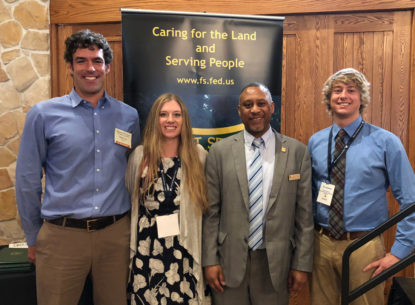
The USDA/U.S. Forest Service awarded the RMLMI Program the Regional Forester’s Honor Award.
Rocky Mountain Land Management Internship
Work part-time with the USFS while earning a degree in Sustainability Studies.
Digital Media Internships and Mentoring
All digital media programs include internship and electronic portfolio development.