
EMT: Wilderness Medical Professional Certificate
The recommended certification for entry into the wilderness EMS workforce
The Wilderness Medical Professional Certificate of Completion (COP) provides students with comprehensive educational certificates for entry into the wilderness EMS job force and includes the EMT Basic (12 credits), WEMT Upgrade (3 credits) and EMT-IV (2 credits).
After completing the program, students are eligible to test and certify for NREMT-Basic, State of Colorado EMT-B and EMT-IV, and be awarded a 3-year WEMS Wilderness EMT Certification.
Accelerated, five week format
The Wilderness Medical Professional COP is offered In an accelerated format over five weeks. Course instruction will include a combination of learning styles, including online work, video conference sessions, in-person lab sessions and 4 clinical rotations (to be scheduled during weekends or after the course).
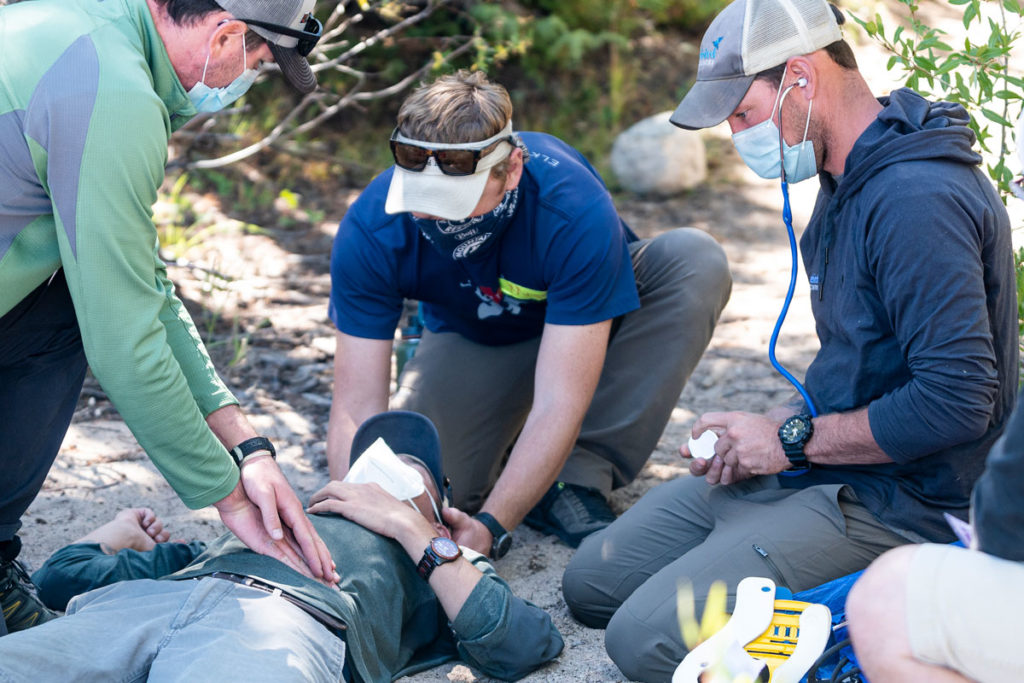
The first weeks of the face-to-face field section will consist of hands-on skills training in the EMT lab and day trips to local wilderness venues for scenarios. The last week of the face-to-face field section is a five-day camping trip. In the field, students will practice and train wilderness rescue medicine techniques, including a nighttime scenario and stress inoculation training.
CPR certification is included in the EMT course. Drug screening and background checks are mandatory for clinical rotations.
This program has a fee that may be non-refundable. The $800 program fee (subject to change) and charges do not include State of Colorado nor NREMT EMS certification fees, vaccines and immunizations.
Semester Format
Alternatively to the accelerated format, students can take the EMT class over a semester and then obtain their EMT-IV and wilderness EMT certification the following semester to complete the wilderness medical professional certification.
This summer (2022) the Wilderness Medical Professional COP will be offered out of CMC Steamboat Springs.
Prerequisites include: students must be 18 years old by first class, GED or high school diploma and college-level reading proficiency. You must have high-speed Internet access and basic computer skills, including navigating, using email, sending attachments.
Request Program Information
Upcoming Wilderness Medicine and Rescue Accelerated Courses
Wilderness EMS Certifications Spring 2024 Schedule
Contact Brian at btaylor@coloradomtn.edu for more information.